
By Alissa Heirigs On Sales Enablement
For you if your sales-enablement content feels clunky or isn’t getting used. Find out how smart design can increase adoption.
A big part of sales enablement is helping reps overcome objections from customers. (Or equipping them to prevent the objections in the first place.) But what happens if you’re encountering pushback from sales — about your sales enablement materials?
“I’m sure this material is helpful, but I just don’t have time.” (A capacity problem)
“I can read all this, but there’s no way I’ll be able to retain it.” (A cognition problem)
“I’m a visual learner. I’m really going to struggle to digest this.” (A comprehension problem)
They’re reasonable objections. Heck, I’m a writer who’s passionate about sales enablement, and I still struggle to digest giant blocks of text.
So, what’s the answer? Is it cutting down the copy? Maybe. (As much as it pains my egocentric little scribbler’s heart to admit it.) But the truth is, sometimes sales enablement materials are long. Because there’s a lot you need to say — and a lot your reps need to learn. In those cases, the answer often lies not in the verbal but the visual. (They’re equally important to message strategy, after all.)
Let’s take these objections one by one and see how great design can turn “Yeah, but…” into “Heck, yeah.”
Facing other objections from sales?
That could be a sign: You haven’t addressed the 9 needs of adoption. Download our ebook to find out what they are and how to meet them. Then watch your reps buy in — and your sales take off.
“I’m sure this material is helpful, but I just don’t have time.”
Salespeople are busy. They’re chasing leads, answering emails, fielding calls, doing endless paperwork, and hustling to hit quotas. One sales rep we interviewed said they didn’t even have time to go to the bathroom during the day. (!!) So giving these folks an 80-page playbook as their only resource isn’t just daunting. It’s demoralizing.
The solution: Give them multiple formats.
When creating a sales enablement system for Veritiv, a Fortune 500 packaging company, we knew two things:
-
- People learn in different ways. (More on this in a minute.)
- They have varying amounts of time to spend.
So we started presenting the same content in multiple formats:
-
- Handbooks
- One-sheets
- E-learning modules
- Podcasts
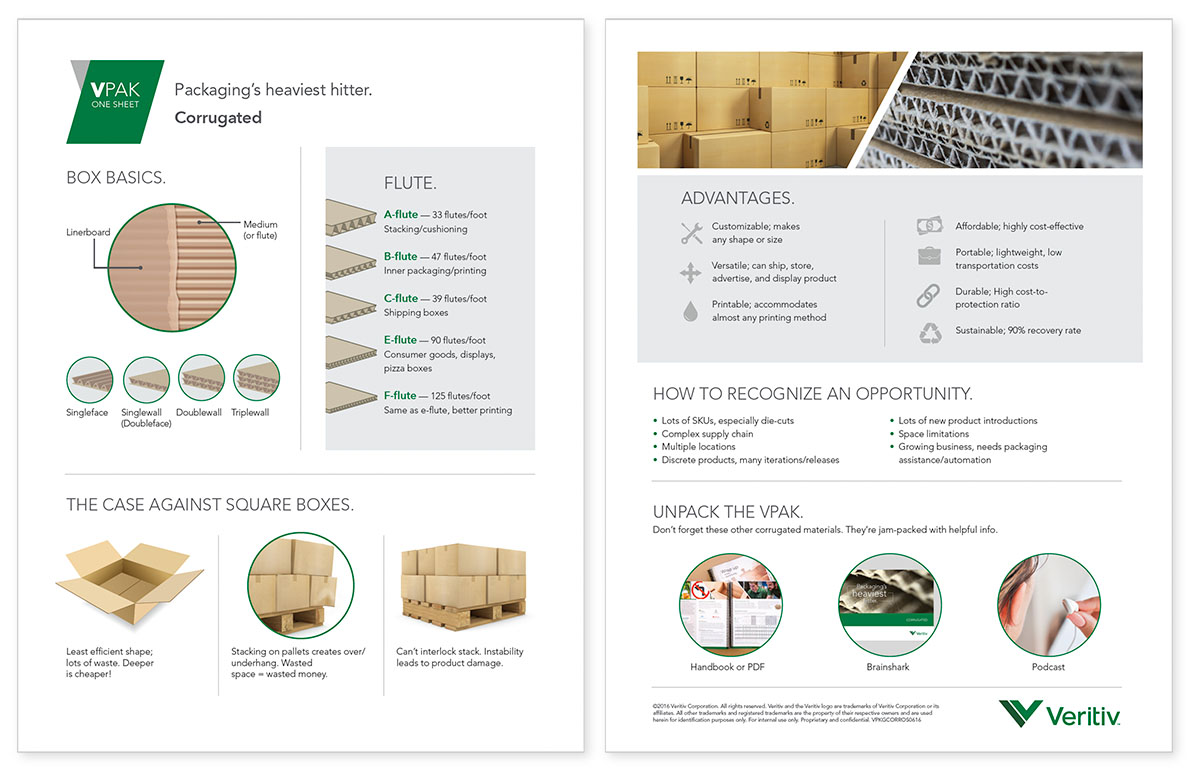
50+ content bundles later, we had covered everything from appliances to agricultural products to aerospace parts. That’s a lot to learn from a rep’s perspective. But because we gave them different ways to consume the content, they had options. They could spend 20 minutes reading a full handbook at their desk. Or 90 seconds scanning a one-pager before heading into a client visit.
One example: The handbook on corrugated packaging was 16 pages long. Here’s the one-page version. “I just don’t have time” is a thing of the past when you give them something this short and visual.
“I can read all this, but there’s no way I’ll be able to retain it.”
Stats on reading retention are kind of depressing. John Medina, author of Brain Rules, has found that we only remember about 10% of what we read after three days.
The solution? Add pictures.
When you do, recall shoots up to 65%, according to Medina. One example of this principle still sticks in my mind from years ago.
During the pandemic, all non-essential businesses were forced to close their doors, many for months. And the shutdown was sudden. Some businesses didn’t even have time to do a thorough cleaning beforehand.
Food scarcity plus the decrease in human foot traffic caused pests (especially rodents) to be bolder than usual. On top of that, many businesses elected to stop their regular pest control services while they were closed.
Our client Terminix Commercial knew all this created a perfect storm for pest problems. And they wanted to let their customers know: This is a problem, and you need to address it now!
Here’s one page of a piece we created for them that illustrates:
-
- How easy it is for pests to enter a building.
- How fast they reproduce when left undisturbed.
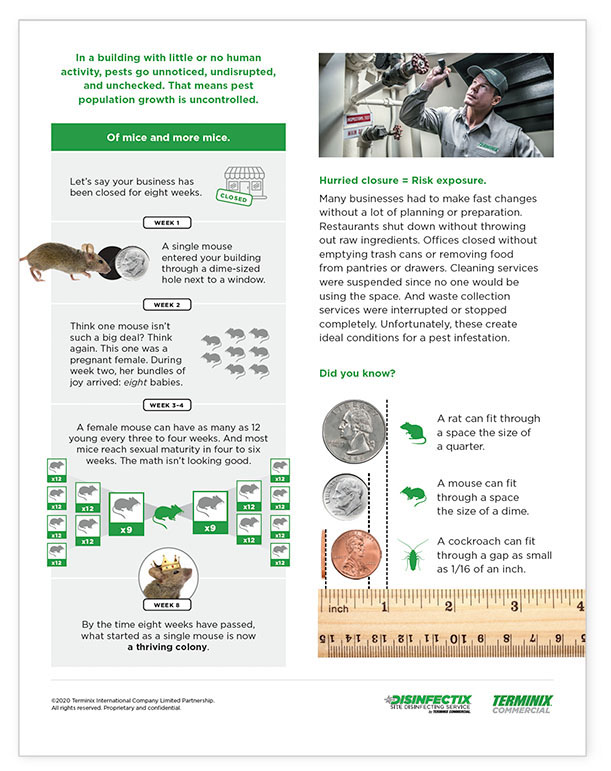
Would it have been as memorable to say, “A rat can fit through an opening that’s less than an inch wide”? No. But I still remember that rat next to the quarter every time I think of rodents. ::shudder:: Don’t get me started on the cockroach.
When you’re creating your sales enablement materials, remember: Reading retention increases 550% when you add visuals to text.
“I’m a visual learner. I’m really going to struggle to digest this.”
At least 65% of people are visual learners. That powerful stat is attributed to Dr. Richard Felder, creator of the Index of Learning Styles. Visual learners remember what they see more easily than what they read or hear.
The solution: Make it scannable.
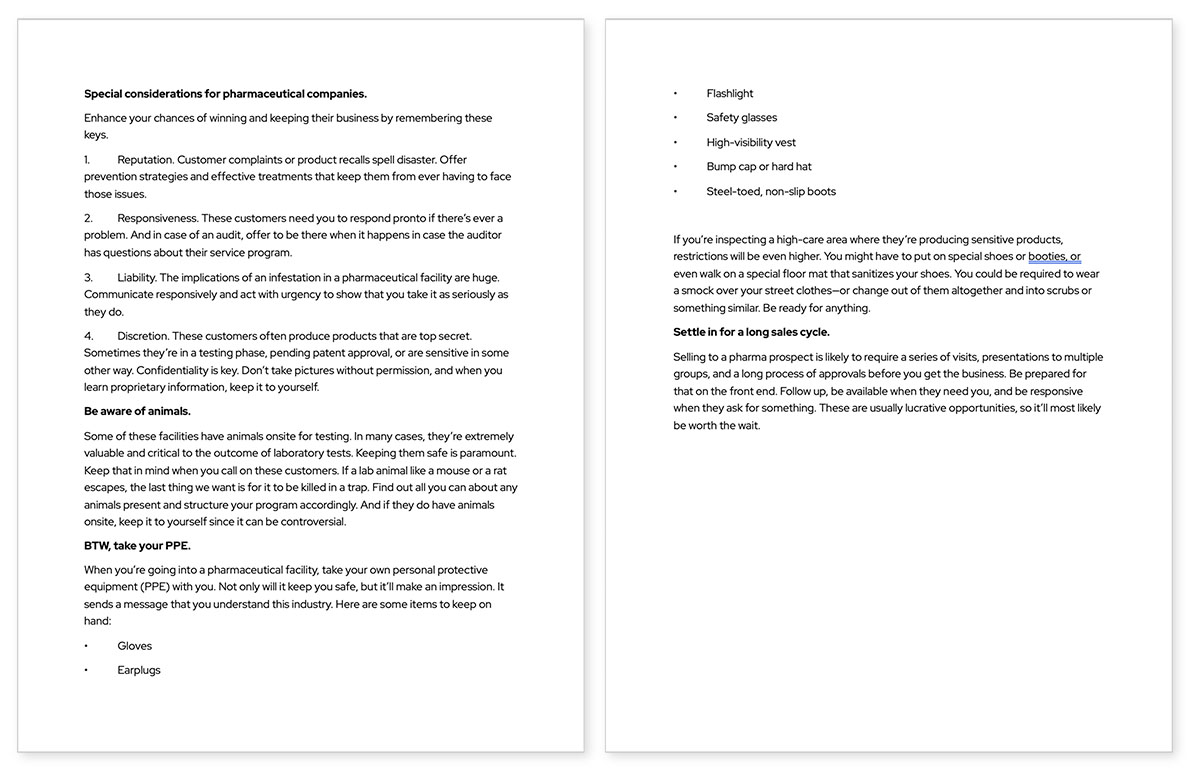
Here’s an example of how long-form content can be much easier to absorb when you make it highly visual.
Before:
After:
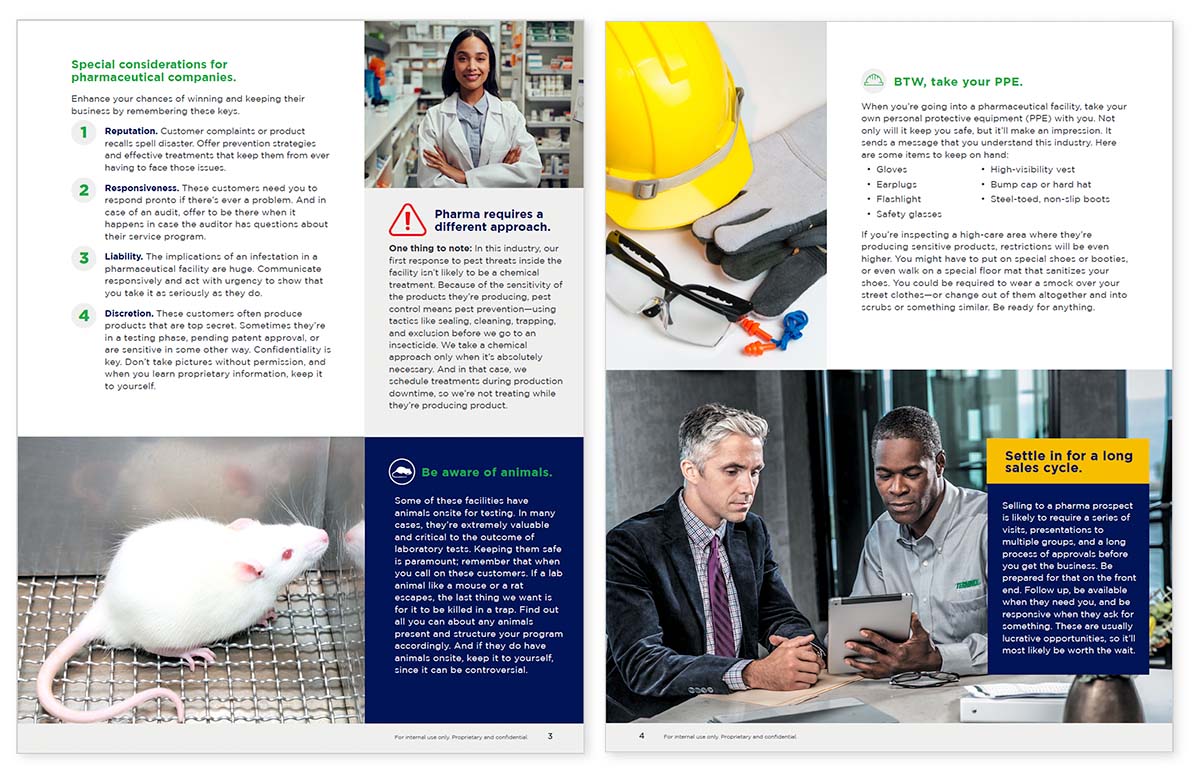
I’ll admit, even I don’t want to read that text version — and I’m the one who wrote it!
You can see how thoughtful design makes it consumable.
-
- Relevant icons and eye-catching photos reinforce the messages in the copy.
- Bold text and strategic colors draw the eye to the most important takeaways.
- Ample white space and a clear hierarchy make even complex content consumable.
- Reading narrower columns just feels easier. Your eye doesn’t have to track all the way across the page.
When you’re creating your sales enablement materials, remember: People have different learning preferences, so include a mix of text, charts, diagrams, pictures, and other visuals.
Design is as close to a magic bullet as it gets.
There’s no one-size-fits-all solution to getting your sales reps to read and retain your materials. But the one-size-fits-none solution is making them read reams of text-only documents.
Need a little help making sure your sales enablement materials are customer-centric, clear, compelling, and controlled? Get yourself a counterpart for that.
Related:
Help your sales team recognize opportunities with visual tools
Hold the cheese: How to choose authentic stock photos
