

By Nichole Hunkus On Message Strategy, Strategic Planning, Web Content Development
For you if you want to build trust with customers. Learn how accountability can lay the foundation for a better relationship with your clients.
The day “Oh crap” strengthened a customer relationship
Ever do your best email proofreading after hitting send? Yeah, me too. On a hectic afternoon, one of those post-click regrets came back to haunt me. But what I didn’t expect: It led to one of the best partnerships of my career.
Between back-to-back meetings and competing deadlines, I rushed to reply to an email. Off it went to a thread full of stakeholders and leadership — with the wrong delivery dates for a launch. The second I realized it, my stomach dropped.
Our client replied graciously and followed up with me privately to clarify. We were about to quietly course-correct when a manager jumped in and called out the mistake to the group. There it was. In writing. To everyone.
At that point, there was only one move. I took a deep breath, replied, and took responsibility. I shared the correct information. Then I spiraled. Mid-spiral, my phone rang. It was the client. We hadn’t worked together long, and I braced for criticism.
Instead, she thanked me. She told me she appreciated how I handled it. That in all her years, she’d rarely seen someone take responsibility so openly. I was stunned. That moment rewired our relationship. From that day on, trust wasn’t tentative. It was foundational. With every project, our collaboration deepened, creative flourished, and results improved.
And the connection extended beyond the work. When I had my baby, she hand-embroidered a set of clothes as a gift. We no longer work together, but we still keep in touch. All because of one oversight. And the decision to face it head-on.
Trust is the glue of life. It’s the most essential ingredient in effective communication. It’s the foundational principle that holds all relationships.
— Stephen Covey
How a foundation of trust fuels your marketing strategy
My experience reinforced something we believe deeply at Counterpart. Crafting the perfect message takes more than expertise. It takes trust, honesty, and mutual respect. Otherwise, even the most disciplined approach falters. When clients believe in you, every element of the 4Cs hits harder.
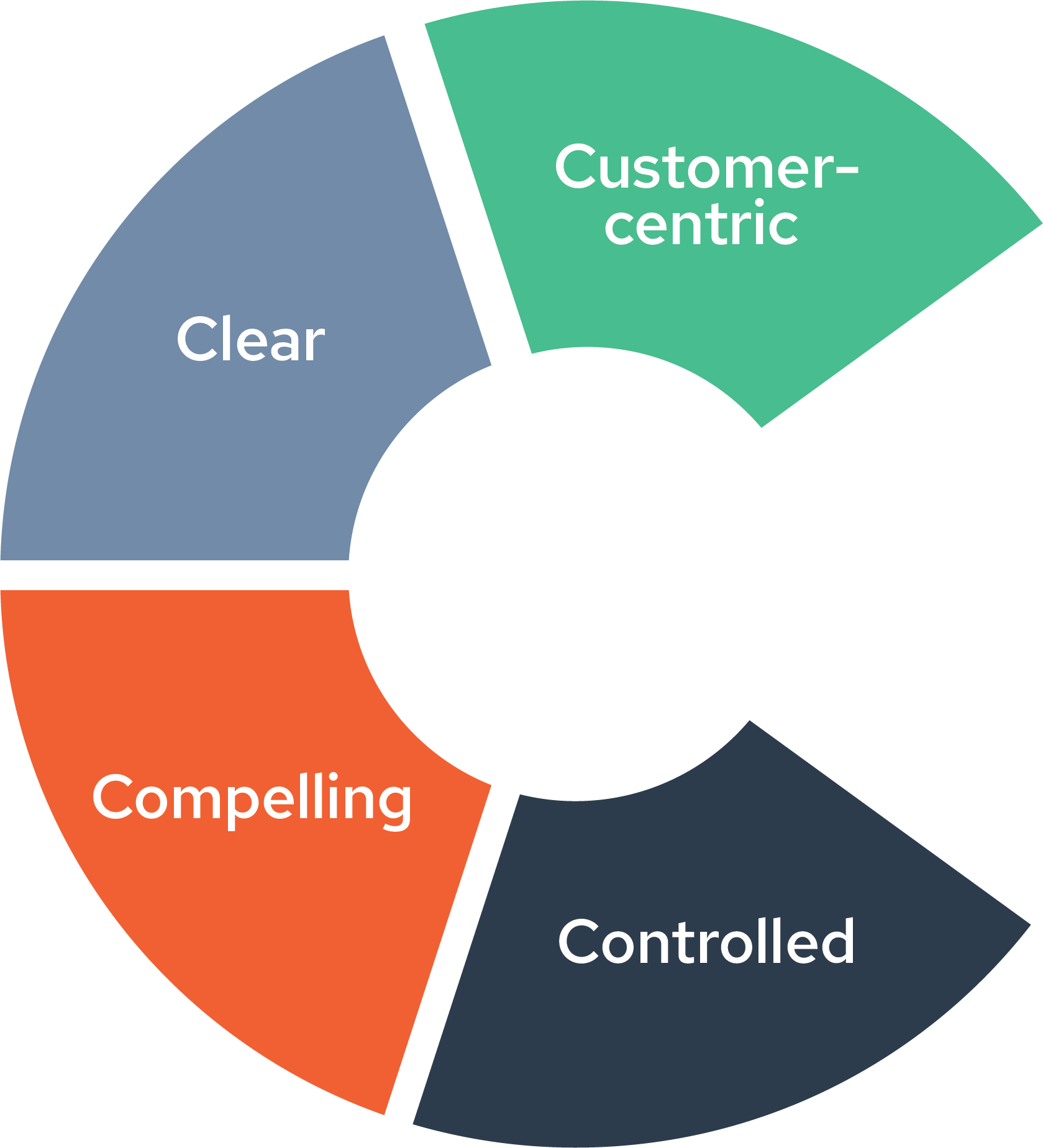
Customer-centric. A confident client gives you access to SMEs, sales reps, and clients. You get the real stories, warts and all: objections, insecurities, and past missteps. That’s where meaningful messaging lives.
Compelling. A customer who has faith in you is more likely to greenlight unexpected creative. They know you understand their strategy and audience. As a result, your team feels comfortable challenging assumptions and pitching ideas.
Clear. Solid client relationships remove the need for constant back-and-forth or second-guessing. Clarity accelerates decision-making and alignment. Content is naturally more persuasive and powerful.
Controlled. When clients let you steer the ship, message strategy becomes proactive rather than reactive. Your customers invite you to shape direction, advise on positioning, and ensure messaging matches across channels.
Trust leads the way. Solid client relationships follow.
Credibility isn’t built in a single meeting. It grows in the small, deliberate moments — and every interaction matters. Here’s what that looks like in practice.
- Keeping promises. You take deadlines seriously and build in buffer time, so clients are never left wondering.
- Being honest. If you don’t know something, say so. (One of Counterpart’s core values is #KeepItReal.)
- Sharing next steps. Every meeting ends with a defined path forward.
- Acknowledging contributions. Share credit openly across teams and clients. Collaboration only works when everyone feels seen.
- Speaking your language. You adapt to the customer’s terminology, tone, and communication style to stay aligned from day one.
Accountability builds trust and better work
Mistakes happen. But they can be opportunities to create lasting partnerships and more powerful creative. If our approach sounds like a good fit for you, we’d love to talk.
Related:
What is a sales playbook?
How to create a sales playbook
